 Written by INDUS MED NEWS 1 October, 2025 7:25 pm .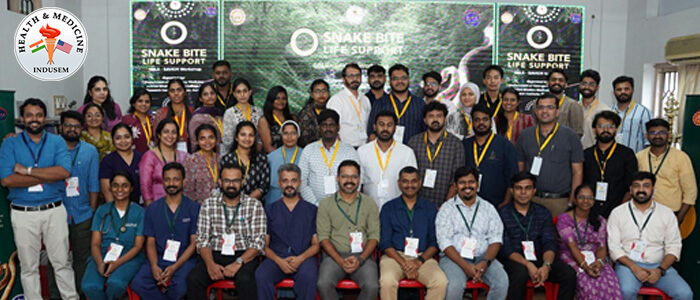
Jubilee Mission Medical College & Research Institute, with academic collaboration from Emergency Medicine Association (EMA), Academic College of Emergency Experts (ACEE) conducted the second edition of the Snake Bite Life Support (SBLS) – SAVIOR Training Program on 19th and 20th September 2025, coinciding with International Snakebite Awareness Day. The program was inaugurated by Rev. Fr. Terrin Mullakkara (Assistant Director, Jubilee Mission) in the presence of Dr. Shibu Kallivalappil (Medical Superintendent), Dr. M. A. Andrews (Principal), Dr. Babu Palatty (HoD, Emergency Medicine), and Dr. P. C. Rajeev.
What is SBLS?
Snake Bite Life Support (SBLS), core idea envisioned as an innovative, Made in Bharat – Made for Bharat initiative, aimed at educating and empowering physicians to effectively manage snakebite, a neglected tropical disease. The program is designed to build a network of trained professionals, fostering collaboration, uniformity, and evidence-based practices in snakebite management across India.
SBLS comprises of two complementary modules:
- SAVIOR –Snakebite Assessment, Venomous bite Intervention, and Optimal Referral modules aims to train health providers in remote and peripheral hospitals to deliver standardized snakebite care and optimize referral pathways. (1)
- SAFETi – Skills and Awareness for First-aid, Emergency response and wilderness Training is an introductory wilderness medicine course for healthcare workers and first responders in austere environments. (2)
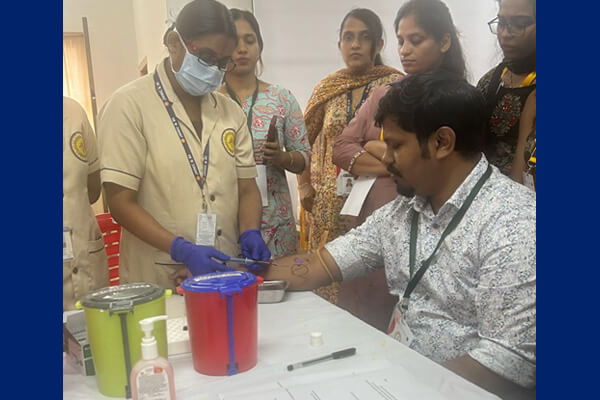
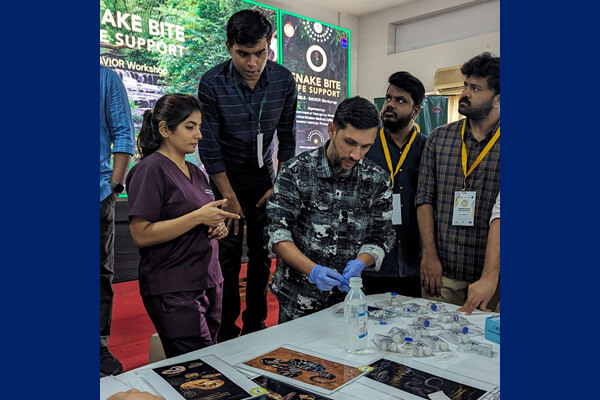
The first edition of SBLS not only trained frontline doctors but also laid the foundation for impactful academic work, establishing a scientific basis for this neglected tropical disease of the poor. (1-4)
Highlights of the Second Edition
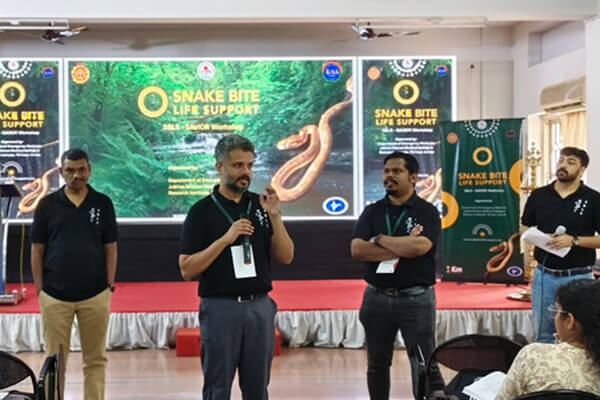
The second edition of Snake Bite Life Support (SBLS) was distinguished by the informal launch of a structured Training of Trainers (TOT) curriculum. Inaugurated with the first SBLS Instructor Course on 18 September 2025, this initiative represents a critical step in strengthening the programme’s sustainability and scalability. By equipping a cadre of certified instructors to independently deliver the SAVIOR and SAFETi modules, the TOT framework ensures standardisation of teaching, promotes regional dissemination, and reinforces SBLS as a nationally relevant model for snakebite preparedness and response.
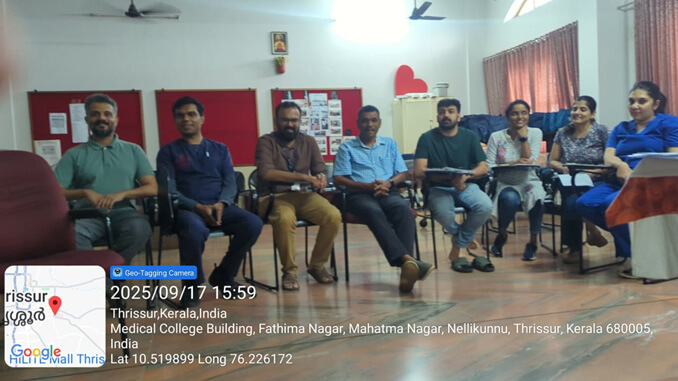
Image 3: The inaugural instructor course participants: from left to right: Dr Siju V Abraham, Dr. Appu Suseel, Dr. Aboobacker Mohammed Rafi, Dr. P.C. Rajeev, Deo Mathew, Dr. Arin Eliza Sunny, Dr. Neethu Nair, Dr Sreekala Radhakrishnan and Dr. Hima Ben Britto (not in the picture).
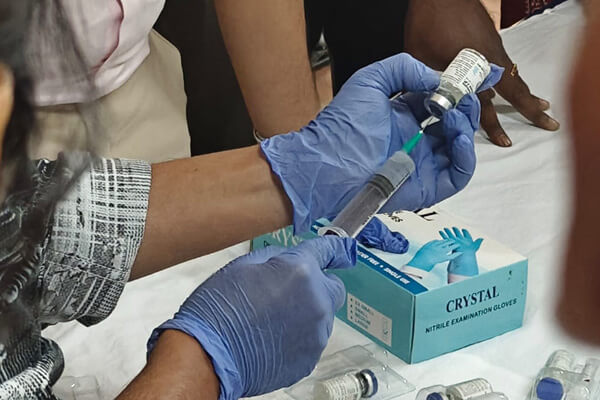
This time, the SAVIOR module was conducted and the hands-on workshop was limited to 30 participants, ensuring maximum interaction and skill-based learning. Delegates attended from Kerala, Tamil Nadu, Andhra Pradesh, Telangana, and Madhya Pradesh. With minimal didactics and maximal focus on practice, the curriculum featured: Principles of prehospital care and first aid in snake envenomation, Venom and Antivenom pharmacokinetics, its preparation, dilution, and administration, Bedside coagulation testing (3) Simulation-based scenarios in neurotoxic and hemotoxic envenomation (4) Shared decision-making & referral criteria discussions.
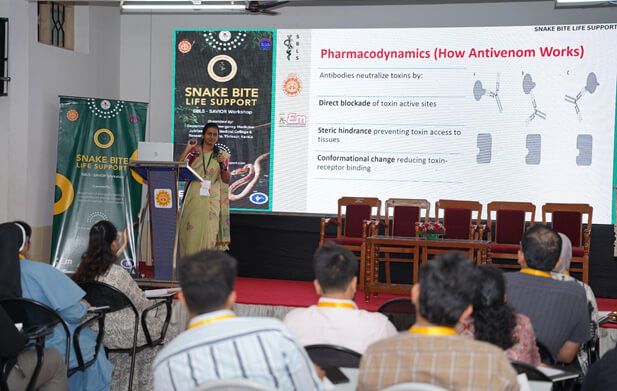
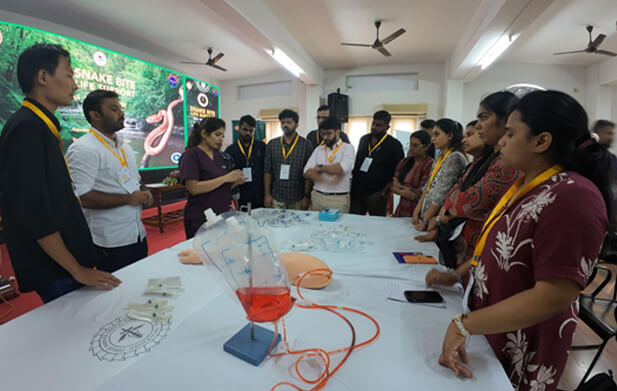
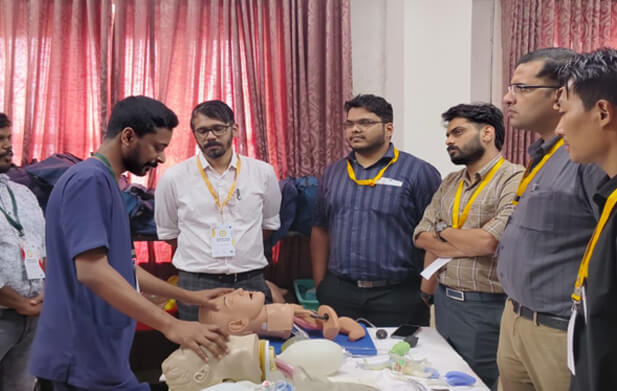
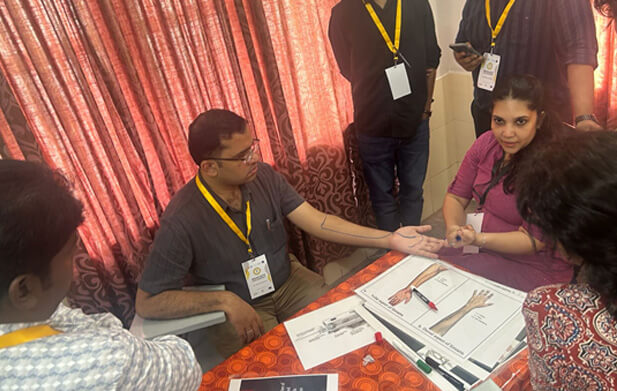
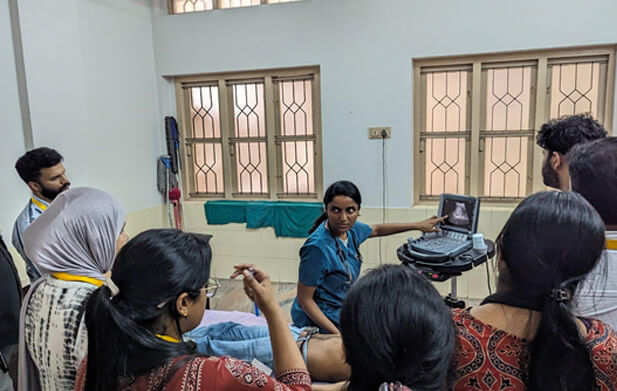
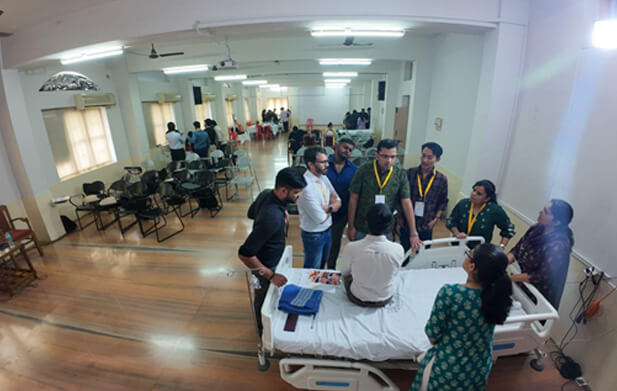
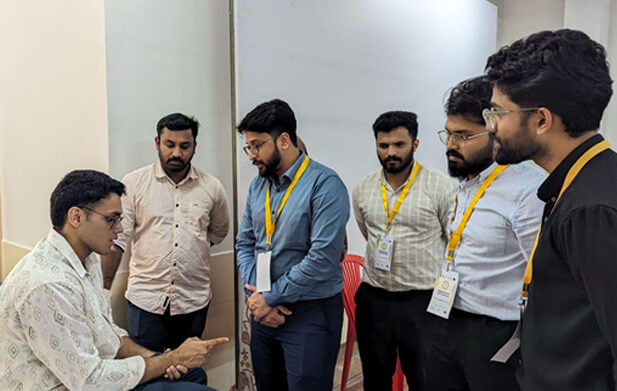
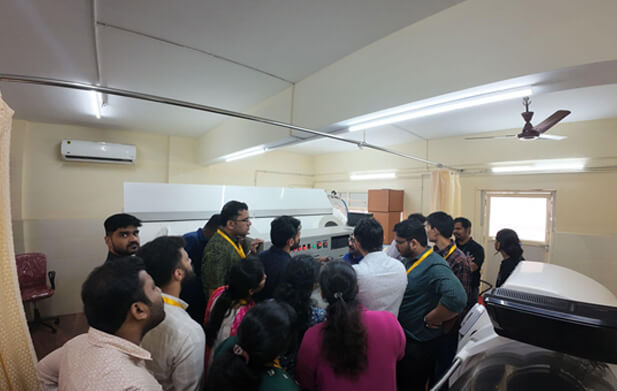
Dr. Deo Mathew (Organizing Secretary) emphasized:“Snakebite victims, whether treated in a tertiary center or a peripheral hospital, deserve the same quality of care. SBLS aims to bridge this gap by training frontline doctors through a standardized, evidence-based curriculum.”
By empowering physicians with knowledge and skills, the SBLS initiative takes another step towards reducing preventable mortality and disability from snakebites in India.(4,5) Endorsed by the WHO Collaborating Center for Emergency & Trauma in South East Asia, SBLS is rapidly emerging as a milestone in Academic Emergency Medicine and Toxicology education in India.
Related News: https://www.indusem.org/blog/sbls-launched/
For More information: https://www.snakebitelifesupport.com/
About INDUSEM
The INDUSEM mission is to envision and implement the future of patient care across the world. This global partnership unites expert educators, innovative researchers, and physicians dedicated to safe patient care across India, the United States, and beyond. Recognised as one of the foremost international collaborations in healthcare, INDUSEM brings together institutions, individuals, and initiatives to advance medical education and practice. To date, it has engaged over 50,000 experts, and its reach continues to expand. For more information, visit www.indusem.org.
About EMA
The Emergency Medicine Association (EMA) was founded in 2015 during the INDUSEM World Congress of Academic Emergency Medicine in New Delhi. EMA serves as the official voice of emergency medicine professionals in India, advancing the development, practice, and progression of quality emergency care. Functioning as a guild of emergency leaders, EMA collaborates with partner organisations, institutions, and individuals worldwide, supported by the INDO-US Emergency and Trauma Collaborative, the Academic College of Emergency Experts in India, and the Academy for Clinical Emergency Nursing in India. For more information, visit www.emaindia.net.
About ACEE
The Academic College of Emergency Experts (ACEE) was founded by leaders of INDUSEM to establish a premier body of clinicians with mastery in safe, evidence-based patient care. Unique in Asia, ACEE grants fellowship only after rigorous evaluation, ensuring the highest standards of excellence in education and practice. Multiple fellowship pathways exist, including emergency medicine, emergency paediatrics, toxicology, and emergency nursing. For more information, visit www.acee-india.org.
About Jubilee Mission Medical College and Research Institute (JMMCRI)
Established in 1952 in Thrissur, Kerala, Jubilee Mission Medical College and Research Institute (JMMCRI) is affectionately known as the “Poor Man’s Hospital,” embodying its motto of Service with love. Recognised as a medical college by the Medical Council of India in 2003, JMMCRI launched one of India’s pioneering MCI-approved emergency medicine residency programmes in 2012, producing leaders in the specialty ever since. Serving nearly 50,000 patients annually, JMMCRI combines compassionate care with vibrant teaching for undergraduates and postgraduates. For more information, visit http://jubileemissionmedicalcollege.org.
About SBLS
The Snake Bite Life Support (SBLS) programme was developed at Jubilee Mission Medical College & Research Institute, Thrissur, building on its legacy as a leading centre for snakebite care and research in India where free antivenom is provided to victims, earning it the name “the poor man’s hospital.” Conceived to address snakebite envenoming—a neglected tropical disease that disproportionately affects the poor—SBLS provides a structured, evidence-based curriculum aimed at training healthcare professionals to deliver safe and effective care. SBLS is delivered through two complementary workshops: SAVIOR, focused on clinical management of snakebite in peripheral hospitals, and SAFETi, which introduces wilderness medicine and first-response skills for healthcare workers and field responders. By combining clinical excellence, multidisciplinary collaboration, and a One Health perspective, SBLS seeks to empower physicians, strengthen healthcare systems, and reduce the burden of snakebite mortality and morbidity in India and beyond. For more information, visit www.snakebitelifesupport.com.
References:
- Snake Bite Life Support | SBLS snake bite workshop | Wilderness medicine | Jubilee Mission Medical College and Research Institute, Thrissur, Kerala, India [Internet]. SBLS. Available from: https://www.snakebitelifesupport.com. Accessed 2024 Jun 23.
- Abraham SV, Sreekumar A, Suseel A, Mathew D, Rajeev PC, George CR, et al. Exploring the role of wilderness medicine in undergraduate medical education in India: impact on student motivation and self-directed learning. Wilderness Environ Med. 2025 Mar 27:10806032251368236.
- Suseel A, Abraham SV, Paul S, Tomy MM, Rafi AM. Comparing modified Lee and White method against 20-minute whole blood clotting test as bedside coagulation screening test in snake envenomation victims. J Venom Anim Toxins Incl Trop Dis. 2023 Jun 19;29:e20220088.
- Sreekumar A, Abraham SV, Rajeev PC, Suseel A, Mathew D, George CR, et al. Educating healthcare workers in snakebite management: a study to determine the effectiveness of the snake bite life support workshop. Toxicon. 2025 Feb 1;255:108235.
- Abraham SV, Mathew D, Sreekumar A, George AV, Chanchal V, Kandiyil PK, et al. Clinical challenges, controversies, and regional strategies in snakebite care in India. Lancet Reg Health Southeast Asia. 2025 Jun 1;37.